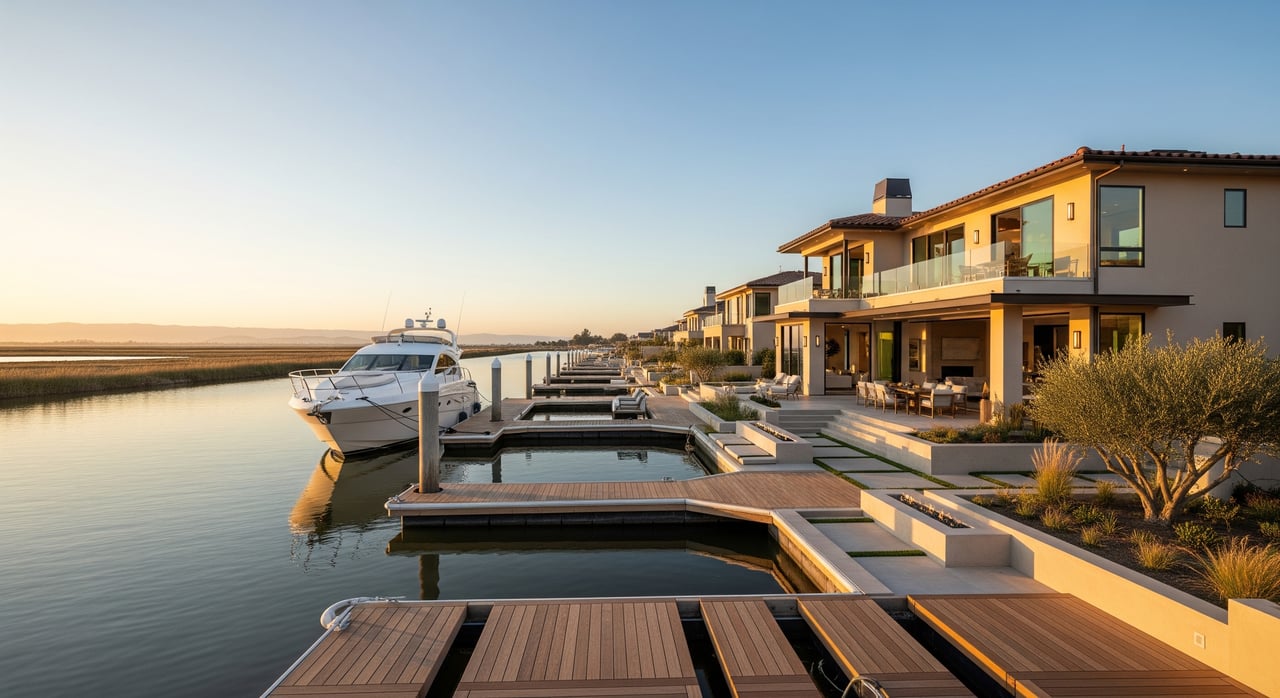
Picture stepping from your back patio onto your boat, easing into calm canals, and cruising to open Delta waters before lunch. If you are drawn to a slower, on‑the‑water lifestyle with room to spread out, Discovery Bay might be the waterfront neighborhood you have been looking for. Buying on the water is exciting, but it comes with unique questions about docks, depths, flood risk, and maintenance. This guide gives you a clear, practical overview of what to expect, what to check, and how to move forward with confidence. Let’s dive in.
Why Discovery Bay stands out
Discovery Bay sits on the Sacramento–San Joaquin River Delta in Contra Costa County. It was purpose‑built as a canal‑oriented community, so many homes have private dock access that leads to open Delta channels. You will find marinas, waterfront parks, and small retail and dining options designed around resident boaters and weekend cruisers.
Because Discovery Bay is unincorporated, county agencies and local special districts provide many services instead of a city government. That includes planning and permitting, roads, water and wastewater, and parks. The result is a community centered on boating and neighborhood amenities, supported by county and local district services.
Commuting to core Bay Area job centers is possible, but you should plan on longer drives than inner East Bay communities. Public transit is more limited compared with urban hubs, so it helps to check travel times during peak hours. Day to day, many residents value the trade‑off of extra commute time for direct water access and a laid‑back Delta lifestyle.
Property types on the water
Canal‑front single‑family homes
These are the classic Discovery Bay properties. Most sit directly on canals with private docks and bulkheads, giving you motorboat access to the Delta from your backyard. Expect a range of home ages and styles, from original‑era builds to contemporary remodels.
Deep‑water lots and estate parcels
Deep‑water parcels can offer dockage for larger boats, depending on canal depth and navigability. Yard sizes vary, but the value driver is often how easily and safely you can reach open channels. Always verify depth for your boat size at the specific property.
Near‑water neighborhoods and non‑waterfront homes
You will find homes near marinas and community boat facilities at a generally lower price point than direct waterfront. These can be great options if you prefer to lease a slip or launch when you want to go out. Proximity to amenities still keeps you close to the Delta lifestyle.
Condos or townhomes near marinas
These are less common but can provide shared slip access or the option to lease a slip through nearby marinas. Review documents carefully so you understand slip rights, rules, and any waiting lists.
On‑water features that matter
Private docks and slips
A key question is whether the dock is deeded with the property or if you rely on a marina lease. Owned docks can simplify daily use and add value, while leased slips can introduce monthly fees and availability limits. Ask the seller for documentation proving dock ownership and any recorded easements.
Boat lifts and davits
Lifts protect your boat and streamline launching, but they add inspection points. Check for permitted installation, mechanical condition, and any corrosion. Budget for maintenance or replacement if components are aging.
Seawalls and bulkheads
Bulkhead condition is one of the top value drivers on waterfront lots. Look for signs of scour, movement, material wear, and prior repairs. A marine or structural specialist should assess pilings, tie‑backs, and fastenings so you know what you are buying.
Canal depth and navigability
Not all canals are equally deep. Depth can affect the size of boat you can keep at your dock and the seasons in which you can navigate comfortably. Confirm depth at the property and ask about silting patterns and dredging history.
Home ages, styles, and lots
Most homes were built in waves beginning in the mid‑to‑late 20th century, with a mix of suburban single‑family styles, ranch plans, and modern updates. Lot sizes range from modest canal parcels to larger deep‑water estates. Regardless of lot size, plan for dock and seawall care as part of regular ownership.
Due diligence for waterfront buyers
Buying on the Delta adds a few extra layers of homework. Build these into your plan early.
Flood risk, levees, and sea‑level considerations
Flood risk is a central issue in Delta communities. Properties near water may be in FEMA flood zones, and levee conditions can impact risk. Ask for flood zone designations, any available elevation certificates, and information about local levee accreditation or maintenance.
Insurance: homeowners, flood, and marine
Standard homeowners policies typically exclude flood damage. If a home sits in a Special Flood Hazard Area, lenders often require flood insurance. Availability and premiums vary, so get quotes early. If you own a boat, consider separate marine coverage and ask about coverage for docks or pilings.
Shoreline structures and inspections
Hire inspectors who are experienced with waterfront properties. In addition to a general home inspection, you will want a marine or structural evaluation of the dock, pilings, bulkhead, boat lift, and underwater conditions. Knowing the age and maintenance history of these structures helps you plan for future costs.
Permits and regulatory agencies
Multiple agencies can have a say in shoreline work, including county building and permitting departments, state wildlife authorities, the Delta planning council, regional water boards, and the U.S. Army Corps for certain activities. Even routine dock repairs may require permits. Get copies of permits and maintenance records, and verify who has jurisdiction before you start any improvements.
Utilities and wastewater
Service can vary by location. Some areas are served by municipal water and sewer, while others rely on private systems or small community wastewater services. Confirm who provides water and wastewater service, what fees apply, and any maintenance responsibilities for private systems.
Community rules and boating logistics
If there is an HOA, review covenants related to docks, boat sizes, and dockside activities. Check local marina services, launch ramps, and any restrictions on boat size or operating hours. Slip ownership versus marina lease is a major cost and convenience factor, so clarify early.
Safety and emergency services
Response times can differ from urban areas. Ask about fire and police coverage and any community evacuation plans related to levee issues or flooding. Knowing how the community handles emergencies adds peace of mind.
What waterfront ownership really costs
Waterfront living includes some unique ongoing expenses. Planning ahead keeps surprises to a minimum.
- Dock and lift maintenance, including electrical and mechanical upkeep.
- Periodic bulkhead repairs or eventual replacement, depending on age and material.
- Debris removal and anti‑corrosion treatments for metal components.
- Potential flood insurance premiums, plus standard homeowners coverage.
- Marina slip or HOA fees if applicable.
A well‑maintained shoreline and dock can retain value and reduce risk. Build a maintenance calendar and set aside reserves for long‑term bulkhead work.
Your buyer checklist
- Verify the type of dock or slip, and get documentation proving ownership or lease terms.
- Order a marine or structural inspection for dock, pilings, seawall, and lift.
- Check FEMA flood maps, request any elevation certificates, and get flood insurance quotes.
- Confirm sewer or wastewater service and any private system obligations.
- Review permits and records for shoreline work and ask about upcoming restrictions.
- Ask local marinas about slip availability, services, and boating rules.
- Discuss financing with a lender familiar with waterfront properties and flood zones.
Financing and the transaction
Appraisals and comparables
Waterfront features do not always have abundant comparable sales. Appraisers need to account for dock ownership, canal depth, and shoreline condition. Expect closer scrutiny of unique features that drive value.
Lender considerations
Conventional loans are common, but lenders may require additional inspections when flood risk or aging shoreline structures are present. Higher down payments can apply in certain cases. Start conversations early so underwriting goes smoothly.
Smart contingencies
Protect your purchase with contingencies that cover marine structures and insurance. Ask the seller for permits, maintenance records, and proof of dock ownership or rights. Obtain a flood insurance quote during escrow so you understand coverage and costs before you close.
Resale planning
Future resale value often hinges on the condition and ownership status of the dock, documented access to open water, and insurance costs. If you plan to remodel or expand, factor in potential permitting complexity early.
Commuting and day‑to‑day rhythm
Discovery Bay offers a quieter, water‑focused lifestyle with easy canal cruising and nearby marinas. Many residents balance that with longer commutes to urban job centers. Since public transit is more limited than inner East Bay cities, test your route during peak times and plan for flexible schedules when you can.
Where to get reliable, current information
When you are ready to verify details, go to the source. These agencies and resources can confirm rules, maps, and requirements.
- Contra Costa County Planning, Building and Public Works for permitting and code questions.
- Discovery Bay Community Services District for local services, parks, water, and wastewater.
- Delta planning and environmental agencies for regulations that affect shoreline work.
- FEMA’s flood mapping resources for flood zone designations and insurance maps.
- The California Department of Insurance for flood insurance consumer guidance.
- Local MLS and Bay Area broker market reports for current prices and inventory.
- Licensed marine inspectors, surveyors, and local marinas for structural reviews and slip logistics.
Ready to explore the water
If you are drawn to mornings on the canal and weekends on the Delta, Discovery Bay delivers a unique blend of comfort and adventure. With the right due diligence on docks, depths, flood zones, and permitting, you can enjoy the lifestyle with clarity and confidence. When you are ready to map out next steps, pricing, and timing, connect with a local advisor who knows the canals, the paperwork, and the pace of this market.
Have questions or want a tailored plan for your move to the water? Schedule your Free Consultation with Bogosian & Co. Real Estate, Inc. and get local guidance from a team that understands Discovery Bay and East Contra Costa waterfront living.
FAQs
What does “deep‑water lot” mean in Discovery Bay?
- Depth varies by canal and location, so confirm the actual depth at the specific property to ensure it fits your boat and navigation needs.
How can I tell if a dock is owned or leased with the home?
- Ask the seller for documentation that shows dock ownership or slip rights, and review any HOA or marina agreements for lease terms.
Do I need flood insurance for a waterfront home here?
- If the home is in a FEMA Special Flood Hazard Area, lenders typically require flood insurance, so get quotes early to understand availability and cost.
Who maintains seawalls and levees for these properties?
- Responsibility can be private, HOA, or a special district, so review maintenance records and ask about any local levee accreditation or oversight.
Are there boating restrictions that could affect how I use my boat?
- Yes, local and Delta rules can set limits on boat size, speed, and operating hours, so check community guidelines and county regulations.
What ongoing costs are specific to Discovery Bay waterfront ownership?
- Budget for dock and lift upkeep, periodic bulkhead work, potential flood insurance, and any marina or HOA fees tied to slips or shoreline care.
How long is the commute to major Bay Area job centers?
- Commutes are typically longer than inner East Bay cities and public transit options are more limited, so test your route during peak hours before you buy.