If you are deciding between a townhome and a single-family home in Dublin, you are not alone. In many newer Dublin communities, both options sit side by side, which can make the choice feel less obvious than you expected. The good news is that your decision usually comes down to how you want to live day to day, from maintenance and parking to outdoor space and future flexibility. Let’s break it down.
Why this choice matters in Dublin
Dublin is planned for a mix of housing types, and that shows up clearly in newer growth areas such as Dublin Crossing, Boulevard, and Francis Ranch. Instead of choosing between two completely different settings, you may be comparing attached and detached homes within the same larger community.
That matters because the decision is often less about location and more about lifestyle. You may have access to similar parks, trails, and community features either way, so it helps to focus on how each home type fits your routine, priorities, and long-term plans.
What Dublin housing looks like
In Dublin, townhomes and single-family homes can overlap more than many buyers expect. Current examples at Francis Ranch show townhomes around 1,970 to 2,071 square feet, while detached homes range from about 2,470 to 2,629 square feet, with larger detached options reaching roughly 4,398 to 4,845 square feet.
That size range tells you something important. A Dublin townhome may offer as much usable space as a smaller detached home, while the upper end of the single-family market still tends to offer more room overall.
Boulevard is another strong example of this local pattern. It includes townhomes, flats, and detached homes in one master-planned setting, which means many buyers are comparing property types within the same community rather than across very different parts of the city.
Compare layout and daily flow
Townhome layout in Dublin
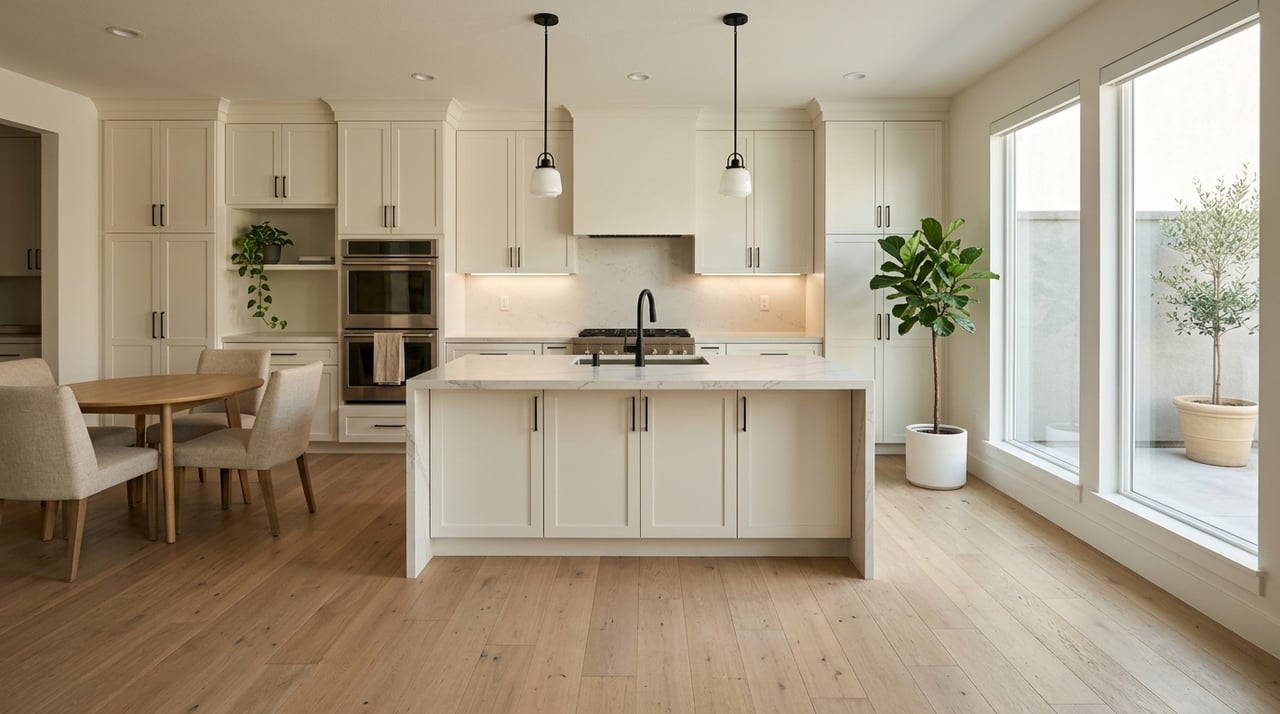
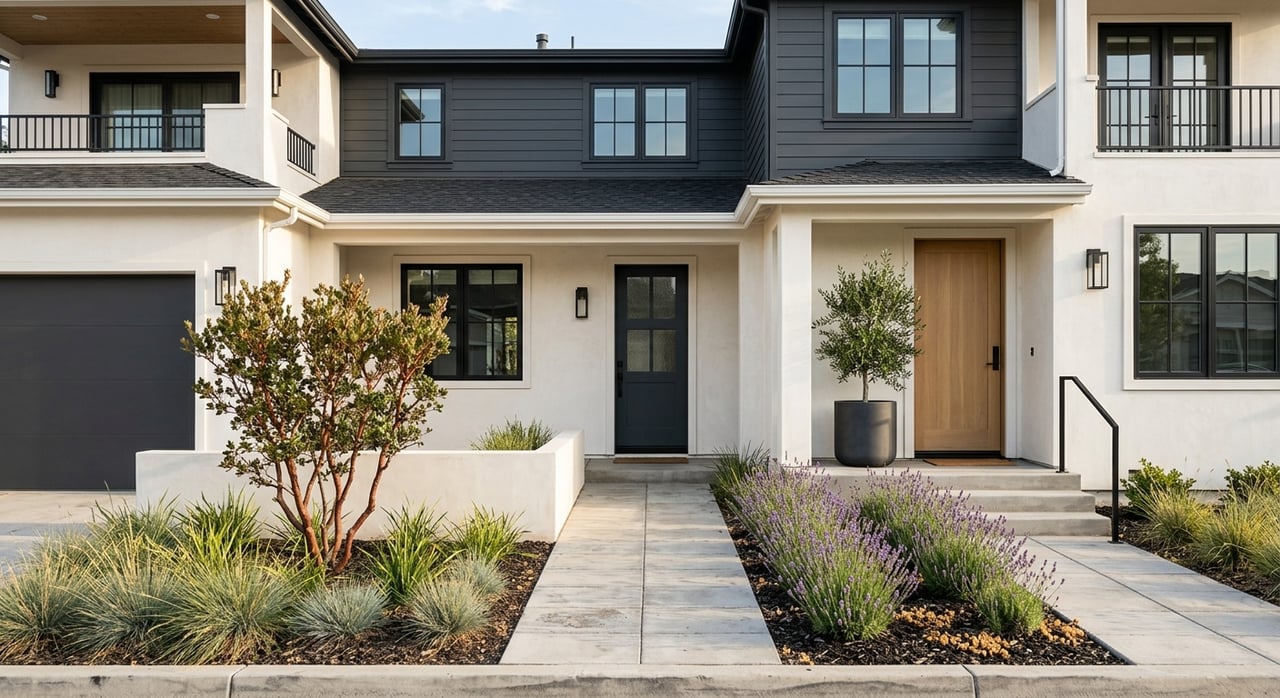
Dublin Crossing describes attached townhomes as homes built in groups of three or more, usually with two to three stories. These homes commonly include garages accessed from a rear alley or common drive, plus private patios or balconies and shared open space.
That setup can work well if you want a more efficient footprint and less exterior upkeep. It can also mean more stairs, which is worth thinking through if you want easier movement between living spaces.
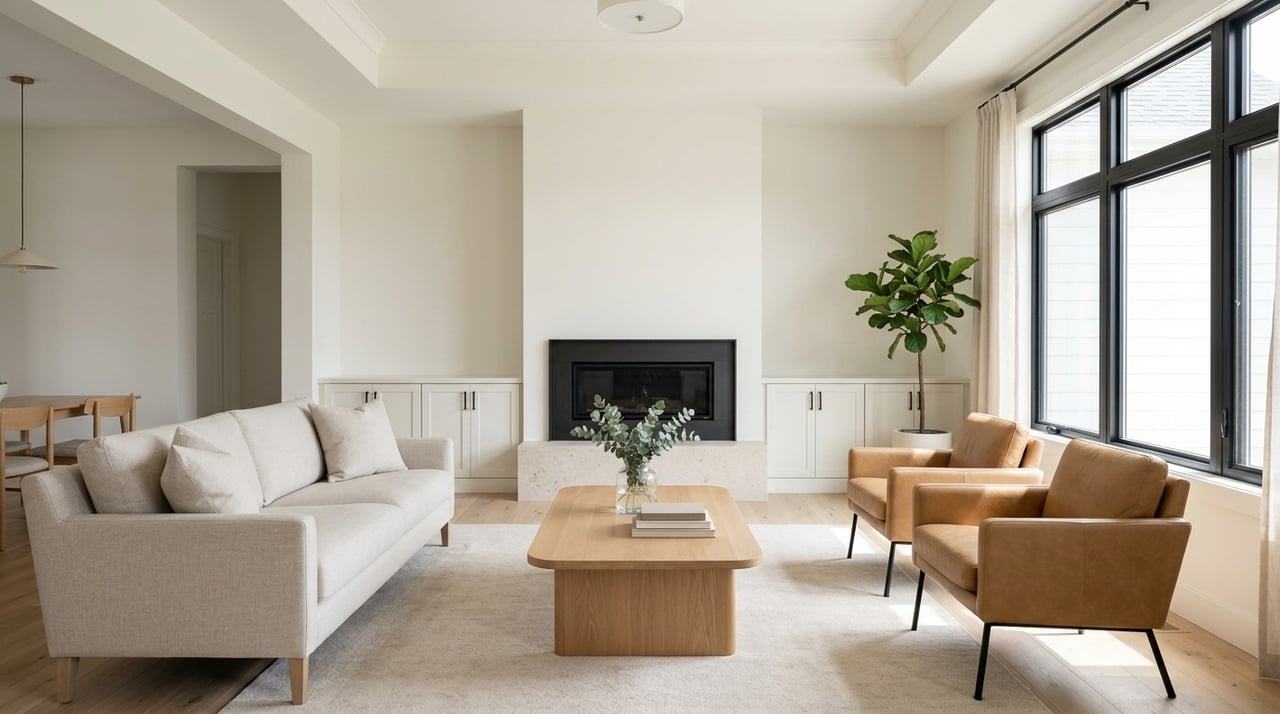
Some newer townhomes are larger and more flexible than buyers expect. For example, Jasmine at Francis Ranch includes four bedrooms, 3.5 baths, a 2-car garage, a private deck, and a first-floor bedroom. Fillmore at Boulevard offers three-story homes from 1,564 to 2,598 square feet, with optional multigenerational space.
Single-family layout in Dublin
Detached single-family homes in Dublin are typically one principal dwelling on its own lot, without shared walls. In local planning documents, these homes are generally built on lots between 3,000 and 6,000 square feet and include private rear yard space and an enclosed garage.
That can give you more separation, a clearer sense of private outdoor use, and often more room for storage. Still, not every detached home follows the same pattern, especially in newer developments.
Even detached homes in Dublin may use alley-loaded or motor-court designs. That is why it helps to look beyond the detached label and compare the actual lot shape, yard area, garage access, and how cars move through the neighborhood.
Parking and outdoor space matter
Parking can feel like a small detail until you live with it every day. In Dublin Crossing, townhomes are planned with enclosed garages that include two side-by-side parking spaces, plus guest parking in open parking areas.
That can be a strong fit if your household needs predictable garage parking but does not need a large driveway or extra vehicle space on-site. You will still want to confirm how guest parking works in the specific community you are considering.
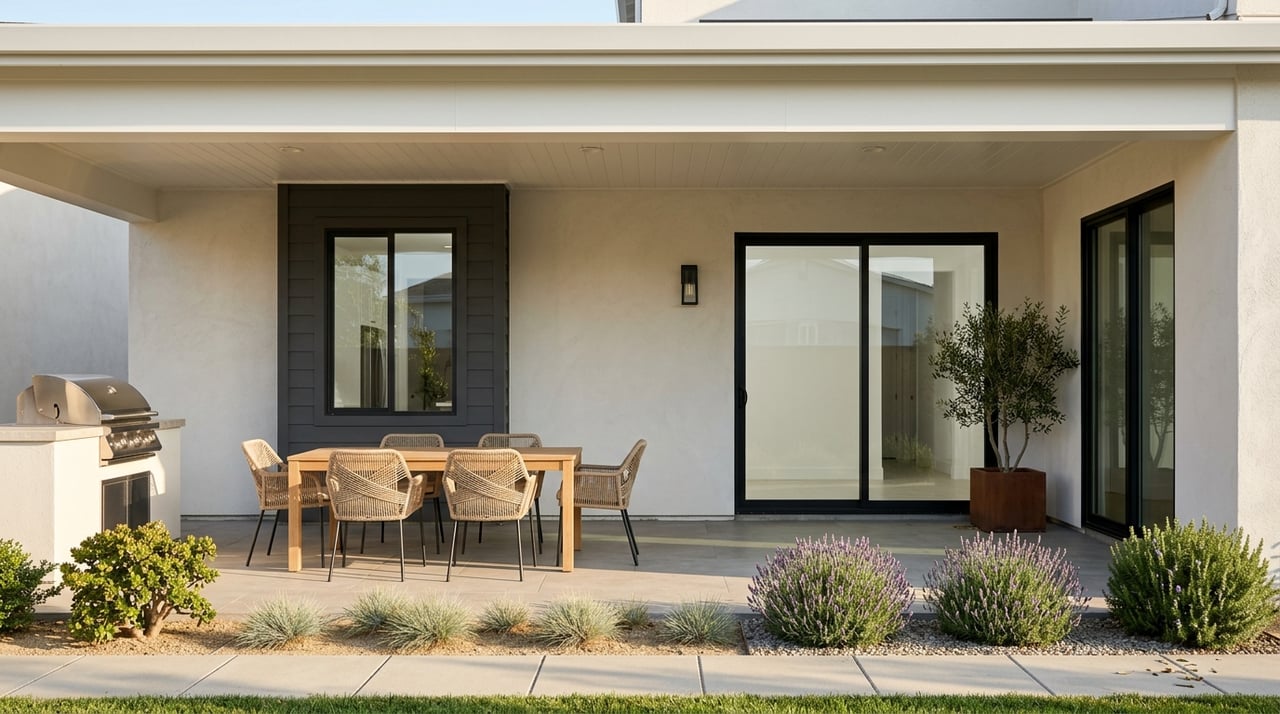
Outdoor space is another area where assumptions can lead you the wrong way. Townhomes in Dublin do not automatically mean no private outdoor area. Local standards specifically mention patios or balconies, and some current plans include private decks.
Single-family homes typically offer private rear yard space, which may feel more useful if you want more room to garden, entertain, or simply spread out. The right choice depends on whether you want outdoor space that is larger and more private, or outdoor space that is smaller but easier to maintain.
Think about maintenance and HOA rules
One of the biggest lifestyle differences is how much property upkeep you want to handle yourself. Townhome buyers in common-interest developments should expect more shared management and more community rules, since associations often oversee common areas and may regulate things like parking, balconies, landscaping, and exterior changes.
In California common-interest developments, association membership is automatic when you buy a lot, home, townhouse, or condominium in the development. The governing documents, often called CC&Rs, define rules, assessments, common-area obligations, and other ownership responsibilities.
That does not mean detached homes are always free from HOA rules. California common-interest developments can include single-family detached homes too, so you should verify the community structure before assuming a detached property has fewer restrictions.
Before you buy, review:
- HOA dues
- CC&Rs and community rules
- What the association maintains
- Any architectural approval requirements
- Parking restrictions
- Reserve health and any special assessment history
Look at monthly cost, not just price
It is easy to assume a townhome will always cost less than a single-family home, but Dublin does not always work that way. Current examples at Francis Ranch show attached and detached homes both marketed from the low-to-mid $1 million range, while Parkton at Dublin Centre starts around $1.7 million.
That is why it makes sense to compare homes community by community. Size, layout, location within the development, and monthly ownership costs can change the picture quickly.
Another local factor to watch is whether the property sits within a Community Facilities District, often called a CFD or Mello-Roos area. The City of Dublin notes that it has several CFDs, including Dublin Crossing and East Ranch, where property owners are taxed annually for debt service and or city services.
So when you compare homes, look at the full monthly payment rather than just the purchase price. A home’s attached or detached status is only one piece of the cost picture.
Amenities can shift the value equation
Shared amenities can make a townhome feel more appealing than you first expected. Dublin has more than 24 neighborhood and community parks, sports fields, and open-space areas, and the city says more parks are planned as new neighborhoods develop.
Francis Ranch is planned with neighborhood parks and trail access. Dublin Crossing is planned with direct access to the Iron Horse Regional Trail and links to Dublin/Pleasanton BART.
If you value nearby recreation and want less private upkeep, an attached home in an amenity-rich area may check more boxes than a detached home with a larger yard. On the other hand, if you prefer to have more of your usable space on your own lot, a single-family home may feel like the better fit.
Future flexibility may favor single-family homes
If you are thinking several years ahead, future flexibility deserves a close look. Single-family homes often provide the clearest path for later changes, especially if you hope to add an ADU or JADU.
Dublin allows ADUs and offers permit-ready prototype plans. The city also notes that a JADU must be contained entirely within a single-family residence.
That does not guarantee every detached home will work for a future project. Zoning, lot conditions, and any community rules still matter. Even so, if long-term modification options are high on your list, a detached home may offer more room to adapt over time.
Which option may fit you best
There is no one-size-fits-all answer in Dublin. The better choice depends on what you want your daily life to feel like and what kind of flexibility you may want later.
A townhome may be a better fit if you want:
- Lower exterior maintenance
- Shared amenities nearby
- A more manageable footprint
- Modern layouts with flexible indoor space
- A community where attached and detached choices are close in location
A single-family home may be a better fit if you want:
- More privacy
- Private rear yard space
- Fewer shared walls
- More room for storage and garage use
- Better long-term flexibility for future property changes
In Dublin, the smartest move is to compare the exact home, lot, community rules, parking setup, and monthly costs instead of relying on the property label alone. A well-designed townhome may fit your needs better than an average detached home, and a detached home may justify the tradeoffs if privacy and future options matter most to you.
If you want help sorting through Dublin communities and comparing the real differences between attached and detached living, Bogosian & Co. Real Estate, Inc. offers personalized buyer guidance built around your goals, budget, and lifestyle.
FAQs
Are townhomes always cheaper than single-family homes in Dublin?
- No. Current Dublin examples show overlap in both size and pricing, so it is best to compare homes within the same community.
Do detached homes in Dublin have no HOA rules?
- Not necessarily. Detached homes can still be part of a common-interest development and may have HOA dues, rules, and assessments.
Do Dublin townhomes have outdoor space?
- Yes. Local planning standards for attached homes include private patios or balconies and common open space, and some current townhome plans include private decks.
What should you verify before buying in a newer Dublin community?
- Review HOA dues, CC&Rs, reserve health, any CFD special tax, garage setup, guest parking, and whether the community amenities match how you actually plan to live.
Can a Dublin single-family home offer more future flexibility?
- Often, yes. Single-family homes may provide a clearer path for future changes such as an ADU or JADU, although zoning and community rules still need to be confirmed.